5 minutes south
Neskowin Beach, Proposal Rock & the Ghost Forest
A 2,000-year-old forest emerges from the sand at low tide, and most visitors drive past without ever seeing it. Timing is everything here — this is how to get it right.
Updated November 5, 2026
Neskowin is the quiet one. There is no strip of shops, no crowd, and on a weekday in winter you can have a mile of sand to yourself. What it does have is a sea stack with a good name, a creek that cuts across the beach, and the remains of a forest that has been standing in the surf for two thousand years.
The catch is that the best of it is only visible at low tide. Show up at the wrong hour and you will see a pleasant beach and wonder what the fuss was about.
The ghost forest
Scattered across the sand just north of Proposal Rock are the stumps of ancient Sitka spruce — roughly a hundred of them, dark and weathered, some wide enough to sit on. They are the remains of a forest that grew here when the land was higher and drier. A major Cascadia earthquake dropped the whole shoreline, the sea moved in, and salt water and sand buried the trunks fast enough to preserve them instead of rotting them away.
Most accounts put the trees at around two thousand years old. They were buried for centuries and only re-emerged in the late 1990s, when a run of winter storms stripped away the sand that had been covering them. They have been shifting in and out of view ever since, which is part of what makes a visit feel like luck.
Go within two hours of low tide
At high tide the stumps are completely underwater and there is nothing to see. Aim to arrive about an hour before low tide: the water is still dropping, the stumps are emerging, and you get the full window before it fills back in.
Proposal Rock
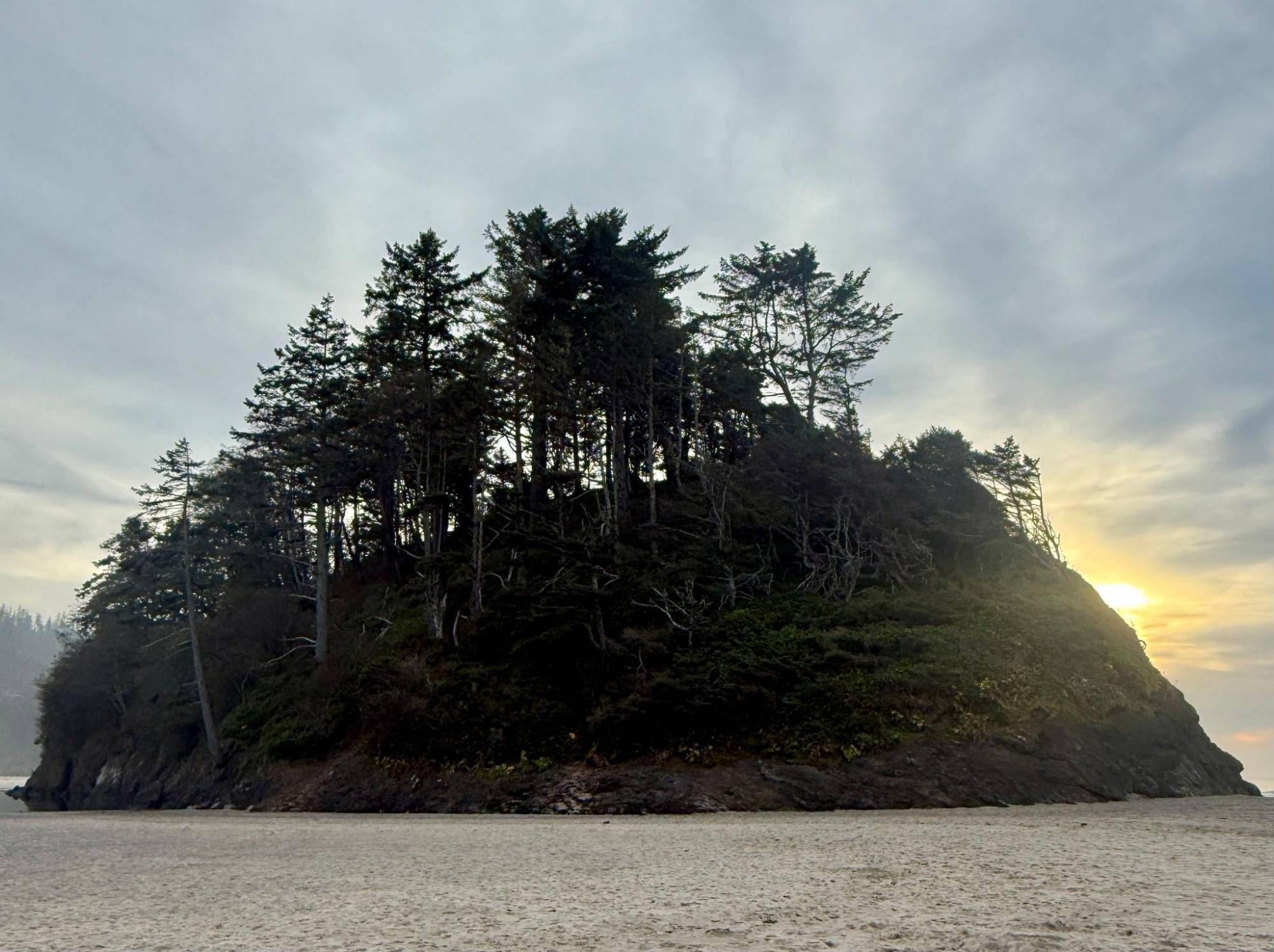
The forested sea stack sitting just offshore is Proposal Rock, and the name is literal — a local sea captain is said to have proposed to a schoolteacher on it in the 1890s. People still do.
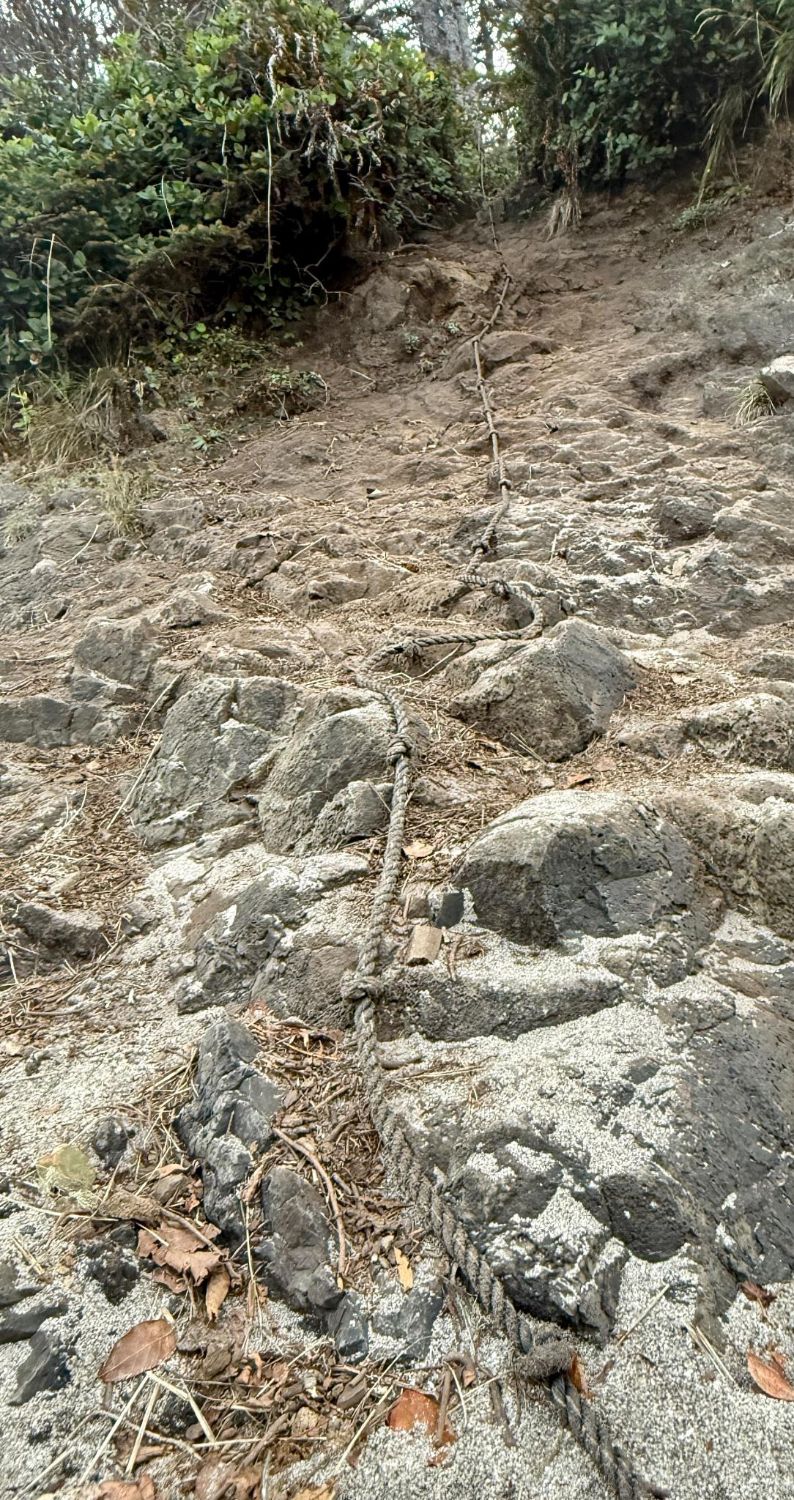
At low tide you can walk out to it across the sand, and if you scramble up you get the best view of the whole beach: the stumps below, the surf, and Cascade Head rising to the south. Getting up it involves wet rock and a bit of a climb, so it is not for everyone.
Watch the tide, and watch the creek
Neskowin Creek runs across the beach between the parking area and the rock, and it deepens quickly as the tide comes back in. People get cut off out there every year. Know when low tide is, give yourself a wide margin, and do not wait until the water is already rising to start back.
Parking and access
Neskowin Beach State Recreation Site has a parking area right at the beach access, off Hawk Avenue just west of Highway 101. There are restrooms. It is small — perhaps a few dozen spaces — and on a sunny summer weekend it fills by mid-morning. In the off season you will usually have your pick.
Practical details
- Access point
- Neskowin Beach State Recreation Site, Hawk Ave
- Parking
- Small lot, free, restrooms on site
- Best tide
- Within 2 hours of low tide
- Ghost forest
- Just north of Proposal Rock
- From Salty Views
- About 5 minutes south
When to go
Winter
The lowest tides of the year fall in winter, and winter storms scour sand off the beach — which means more stumps exposed and more of them standing clear. It is cold and often wet, and it is comfortably the best season for actually seeing the ghost forest.
Summer
Easier weather, calmer water, and good daytime low tides. Sand tends to build back up over the summer, so fewer stumps show. Still worth it, and much the nicer walk.
After a big storm
The single best time. Storms move an enormous amount of sand, and the beach can look completely different afterwards — stumps appear that were buried a week earlier. If a storm has just blown through and the next low tide is in daylight, go.
What else is on the beach
- Agates and jasper in the gravel beds, best after winter storms have turned the beach over.
- Sand dollars, usually in the flatter sand toward the north end.
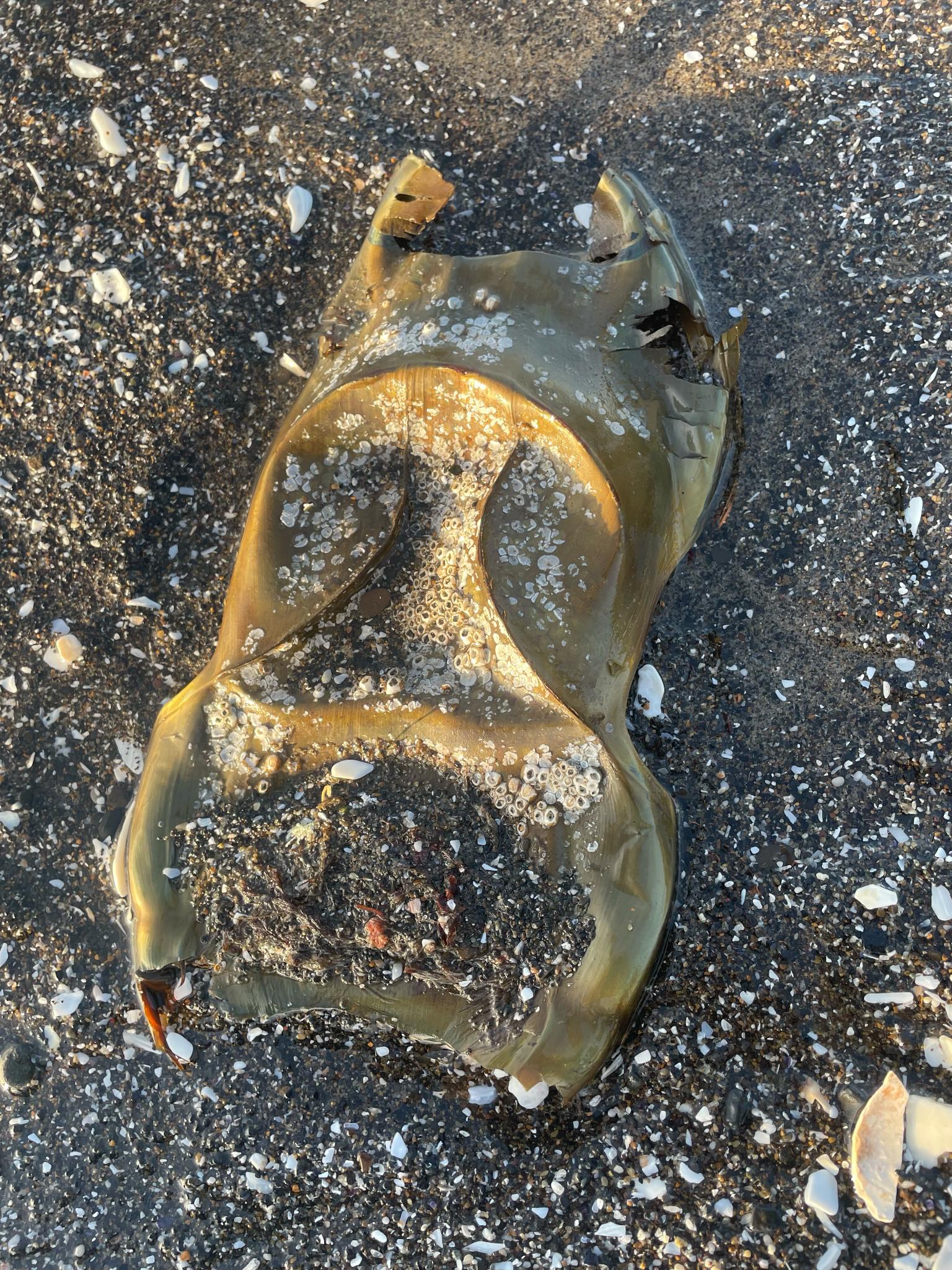
- Mermaid’s purses — the leathery olive egg cases of skates, with a short horn at each corner. The ones here are usually big skate, the species whose cases turn up most often on the north Oregon coast, and a single case can hold as many as seven developing young. Most wash ashore after a storm, and by then the young inside have usually died.
- Jellyfish. By-the-wind sailors — small blue discs with a clear upright sail — strand by the thousand in spring when the wind turns onshore. Later you may find moon jellies, or the big amber egg-yolk jelly. Sea nettles can still sting after they wash up, so look rather than poke.
- Fishing floats. The hard plastic and foam ones break loose from crab gear and turn up all winter. Glass floats — the old Japanese ones — are far rarer and are the find everyone is secretly hoping for; your odds are best on the first low tide after a big westerly.
- Harbor seals offshore, and gray whales passing during the spring and winter migrations.
- Cascade Head filling the southern horizon — the headland itself has trails, though the upper route closes seasonally to protect the Oregon silverspot butterfly.
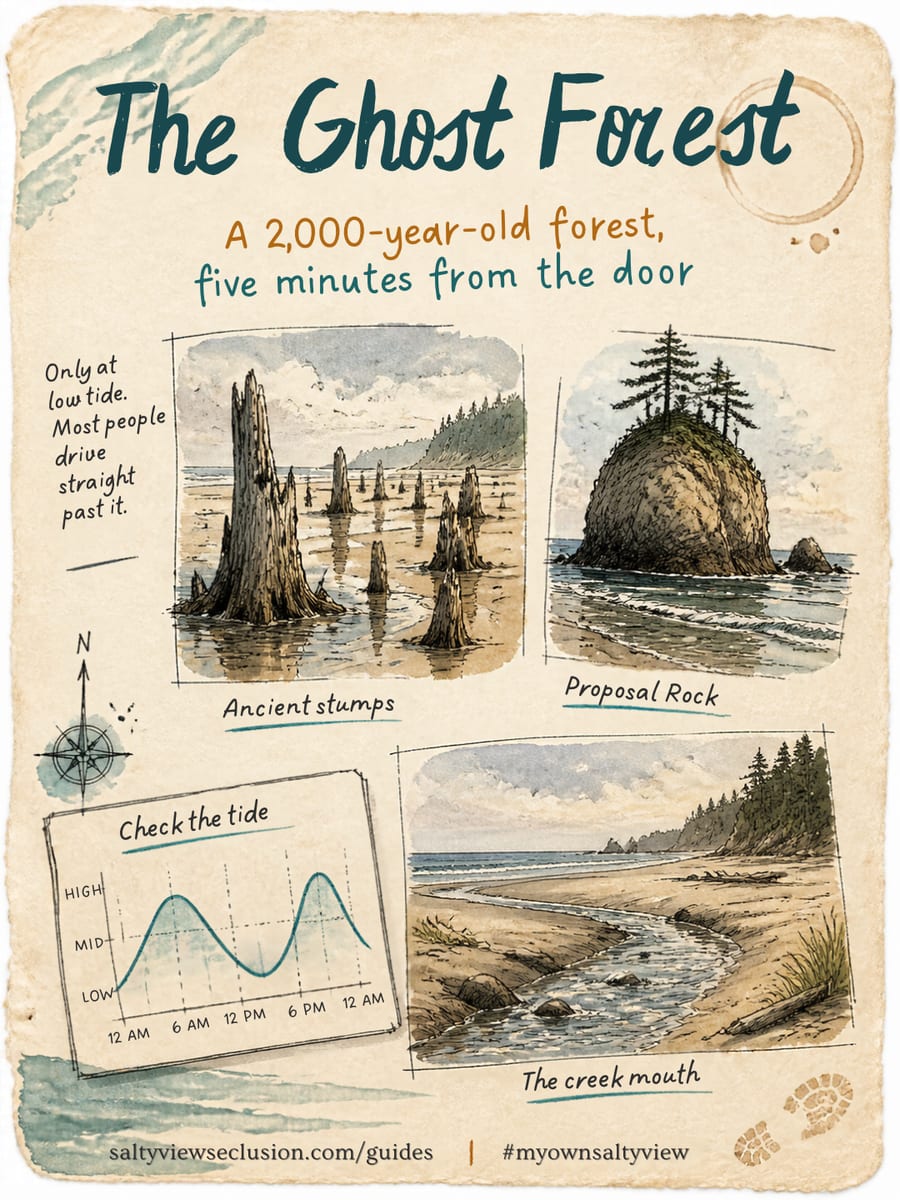
Save it, screenshot it, take it with you. If you find one of these, tag it #myownsaltyview and we will see it.
@saltyviewseclusionCommon questions
When can you see the Neskowin ghost forest?
The stumps are exposed at low tide and completely submerged at high tide. Arrive within about two hours of low tide — ideally an hour before it — and check a tide table before you go. Winter brings the lowest tides and the most exposed stumps.
How old is the Neskowin ghost forest?
The Sitka spruce stumps are generally dated to around 2,000 years old. The forest was drowned when a major Cascadia earthquake dropped the shoreline, and the trunks were preserved by sand and salt water rather than rotting away. They re-emerged in the late 1990s after a series of winter storms stripped away the sand.
Can you walk out to Proposal Rock?
Yes, at low tide you can walk across the sand to Proposal Rock, and it is possible to scramble up it. Neskowin Creek crosses the beach on the way and deepens as the tide returns, so check the tide table and leave a generous margin to get back.
What is the leathery black pouch washed up on the beach?
It is a skate egg case, usually called a mermaid’s purse. Skates are flat, bottom-dwelling relatives of the rays, and they lay their young in a tough olive-brown pouch with a short horn at each corner that anchors it to the seabed. The ones that wash up on the north Oregon coast are most often big skate, and a single case can hold as many as seven developing young — unusual, since most skates lay one to a case. They come ashore after storms, and by then the young inside have generally not survived.
Where do you park for Neskowin Beach?
Neskowin Beach State Recreation Site has a free parking area with restrooms at the beach access on Hawk Avenue, just off Highway 101. It is a small lot that fills on summer weekends but is rarely busy in the off season.