Beaches 5 minutes away
Agate Hunting on the Oregon Coast
The storms that make this coast worth watching in winter are the same storms that strip the sand off the gravel. Agate season runs November to April, and the best morning is the one after a gale.
Updated November 9, 2026
Agates are on this coast all year. What changes in winter is whether you can see them. For most of the summer they sit buried under a deep, smooth layer of sand that the gentle swell keeps piling up. Then the first real storms arrive, the surf scours that sand away, and the gravel beds underneath are suddenly on the surface — which is where the agates have been the whole time.
That is the entire trick. You are not looking for agates so much as looking for exposed gravel, and winter is when the ocean does the digging for you.
The best morning is the one after a storm
Wait for a blow, then go at low tide the next morning while the gravel is still uncovered and still wet. Our live dashboard at saltyviewseclusion.com/stormwatch shows the swell, the wind and the tide together, which is the quickest way to pick the morning worth setting an alarm for.
When to go
Conditions worth driving for
- Season
- November to April
- Best day
- The morning after a storm
- Best tide
- The hour or two either side of low water
- Better still
- A minus tide, which uncovers gravel the ordinary low does not
- Time of day
- Early, before anyone else has walked it
- Light
- Low sun behind the stones — they glow
King tides are worth watching for this too. The same enormous tides that draw people out to photograph the surf move a great deal of sand while they are at it, and the beaches in the days afterwards are often scoured right down.
How to actually spot one
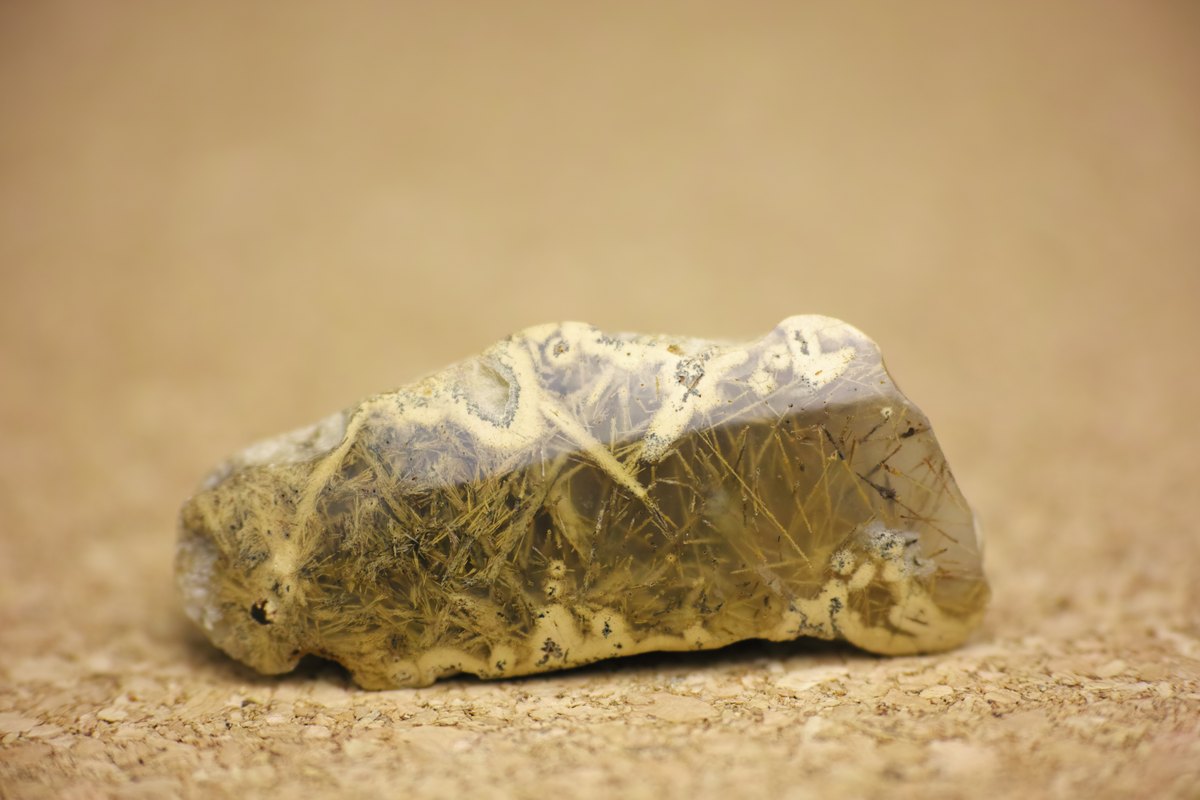
An agate is translucent. That is the one property that separates it from every other wet pebble, and it is why low winter sun matters so much — hold a candidate up and the light comes through it, often honey-coloured or milky white. Dry, they look waxy rather than glassy. Wet, they look lit from inside.
- Work the wet gravel, not the dry sand. The band the water has just left is where they show.
- Walk with the sun in front of you rather than behind. You are looking for something that glows rather than something that shines.
- Look at the gravel beds, creek mouths and the edges where sand meets stone — anywhere the ocean has sorted pebbles by size.
- Go slowly and look at a small patch properly. Sweeping your eyes across a whole beach finds nothing.
- A small hand rake for shifting pebbles is fine and genuinely helps. Digging into the beach is not.
- Take a pouch or a pocket. You will pick up more than you mean to.
The rules, which are real
The Oregon ocean shore is a state recreation area, and taking things off it is governed by an actual rule rather than custom. For agates, shells, stones and fossils, the limits are one gallon per person per day and three gallons per person per calendar year, for personal non-commercial use.
Each person needs their own container
The rule is specific about this: everyone collecting uses an individual container, and you may not pool a family’s finds into one bucket to get around the limit. Anything beyond the limits needs a special use permit from Oregon Parks and Recreation. The relevant rule is OAR 736-021-0090, and it has been amended more than once recently — worth a look before a serious trip.
Nobody is going to measure a child’s pocketful of pretty stones. The limits exist because a gallon a day adds up fast when thousands of people do it, and the gravel beds do not refill on a human timescale.
Where to look near the house
An honest word first: this is not the famous agate coast. The beaches people drive hours for are further south, around Lincoln City, Gleneden Beach and Newport, where the gravel is heavier and better known. You are roughly half an hour to an hour from the best of them, and on a good winter morning they are worth the drive.
What you have five minutes away is a beach that very few people are combing in January. Neskowin is at its best after a storm has stripped it, and the creek mouth sorts stone in a way the open sand does not. The Nestucca beaches north towards Pacific City do the same. You will find fewer agates than at Beverly Beach, and you will find them alone, which is its own kind of better.
Keep your eyes up as well as down
Agate hunting puts your head down at the water’s edge on a winter beach, which is exactly the wrong posture for this coast. Sneaker waves arrive without a bigger wave before them, logs in the swash weigh tons, and an incoming tide against a headland will cut you off. Know which way the tide is going before you start, and never turn your back on the water.
What else turns up
The same winter conditions bring everything else in. Japanese glass floats still arrive occasionally after a long westerly. Agatised and petrified wood shows up in the same gravel. Whole sand dollars survive the trip more often than you would think in winter, when the surf is less busy grinding them. And the things that are neither rock nor shell — egg cases, by-the-wind sailors, the odd seabird bone — are worth a photograph even if they stay on the beach.
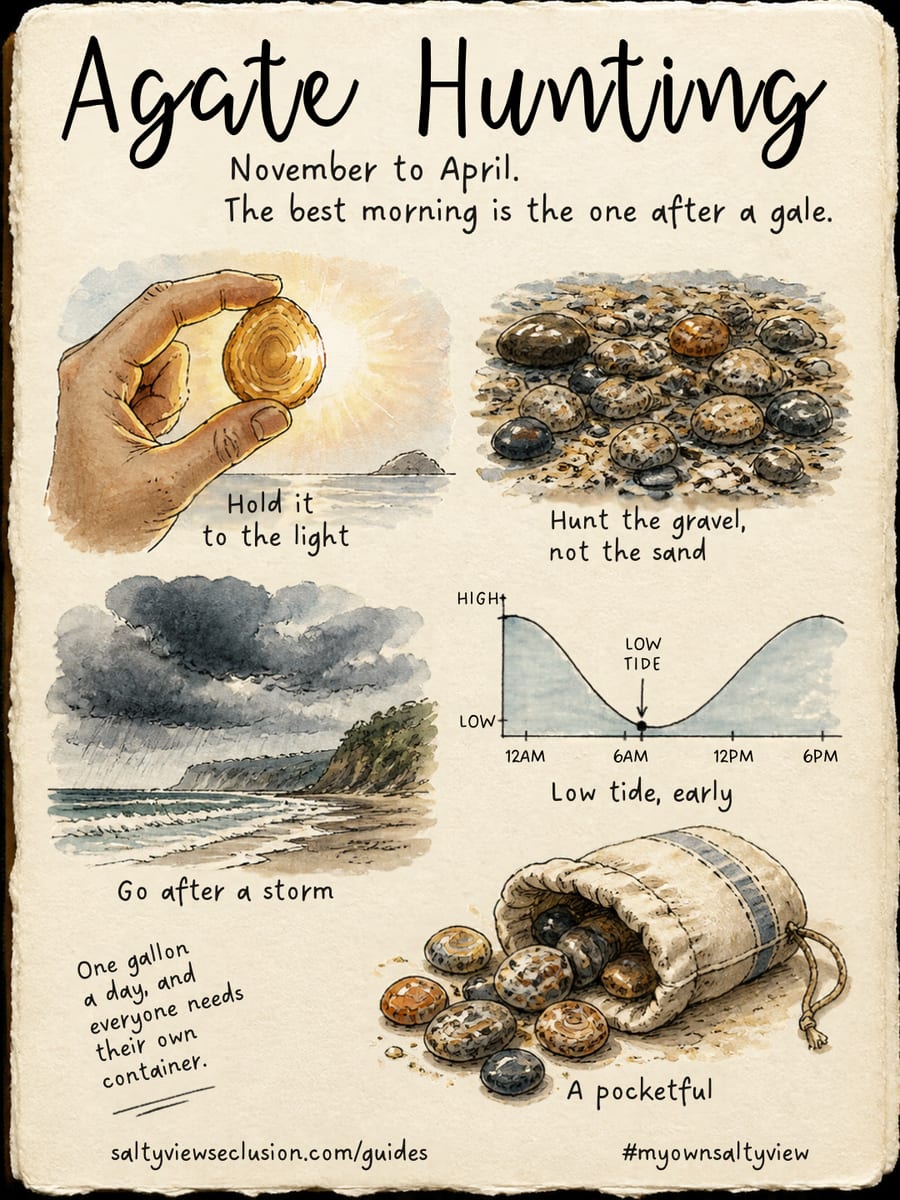
Save it, screenshot it, take it with you. If you find one of these, tag it #myownsaltyview and we will see it.
@saltyviewseclusionCommon questions
When is the best time to find agates on the Oregon coast?
November to April, and specifically the morning after a storm at low tide. Winter surf strips away the sand that covers the gravel beds for most of the year, and a minus tide uncovers more of them. Go early, before the beach has been walked.
How many agates can you legally take from an Oregon beach?
One gallon per person per day and three gallons per person per calendar year, for personal non-commercial use, under OAR 736-021-0090. Each person collecting must use their own container — you cannot combine finds into one. More than that requires a special use permit from Oregon Parks and Recreation.
How do you tell an agate from an ordinary pebble?
Translucency. Hold it up with the light behind it: an agate lets light through, often honey-coloured or milky, where a basalt pebble stays solid. Dry agates look waxy rather than glassy, which is why wet gravel at the water line is easier to search than dry sand.
Can you find agates near Neskowin and Pacific City?
Yes, though this is not the most famous stretch for them — the best-known agate beaches are further south around Lincoln City, Gleneden Beach and Newport, roughly half an hour to an hour away. What the local beaches offer in winter is gravel exposed by storms and almost nobody else out looking.
Do you need a permit to collect agates in Oregon?
Not within the limits. Personal collecting of up to one gallon a day and three gallons a year needs no permit. Anything beyond that, or any commercial collection, requires a permit from Oregon Parks and Recreation.
Is it safe to beachcomb on the Oregon coast in winter?
It is, with attention. The hazards are sneaker waves, which arrive without warning and without a larger wave ahead of them, drifting logs in the surf, and incoming tides cutting off a beach below a headland. Check the tide before you go, keep away from logs in the water, and do not turn your back on the sea.